Famous: A Timeless Script for Every Creative Moment
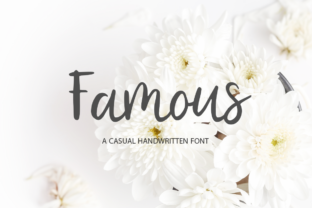
The world of typography is vast, filled with fonts that cater to every need and aesthetic. Among them, Famous stands out as a unique and versatile script that bridges the gap between elegance and accessibility. Designed with a variable baseline and even weight, this font is not just another addition to the digital type library—it's a tool that empowers creators to express themselves in ways that feel both personal and professional.
What makes Famous particularly compelling is its balance. Unlike some scripts that can be overly ornate or difficult to read in large blocks of text, Famous maintains clarity while still offering a sense of movement and fluidity. This characteristic makes it ideal for a wide range of applications, from branding and signage to digital displays and printed materials.
Understanding the Characteristics of Famous
At its core, Famous is a script font, meaning it mimics the natural flow of handwriting. However, it does so with a level of precision that sets it apart from more casual cursive styles. The font features a consistent stroke width, which contributes to its readability, especially when used in smaller sizes. This uniformity also ensures that the font remains legible across different mediums, whether on a screen or in print.
The variable baseline of Famous is another key feature. This means that the height of the characters can be adjusted to fit specific design needs without distorting the overall look. For designers, this flexibility is invaluable, allowing them to fine-tune their layouts with greater control over spacing and alignment.
Additionally, the even weight distribution in Famous ensures that no single part of the lettering feels heavier or lighter than the rest. This consistency helps maintain visual harmony, making the font suitable for both short phrases and longer passages of text.
Practical Applications of Famous
One of the most common uses for Famous is in branding and identity design. Its elegant yet approachable style makes it a great choice for logos, business cards, and other materials that require a touch of sophistication. Whether it's a boutique shop looking to convey warmth and personality or a tech startup aiming for a modern yet human feel, Famous offers a versatile solution.
In the realm of digital design, Famous shines as a display font. It’s often used in web headers, social media posts, and app interfaces where a visually appealing element is needed. Because of its readability, it can be used effectively even in larger text sizes, ensuring that the message remains clear and impactful.
Printed materials also benefit from the use of Famous. From wedding invitations to packaging designs, the font adds a layer of charm and authenticity. Its script-like appearance can evoke a sense of tradition or craftsmanship, making it a popular choice for products that aim to stand out in a crowded market.
Advantages of Using Famous
One of the primary advantages of Famous is its adaptability. It works well in both formal and informal contexts, making it a go-to font for a variety of projects. This versatility is especially valuable for designers who need to create cohesive visual identities across multiple platforms and formats.
Another benefit is its ease of use. Unlike some complex scripts that require careful kerning and spacing adjustments, Famous is designed to work seamlessly with standard text tools. This means that users don’t have to spend extra time tweaking the font to achieve the desired effect, saving both time and effort.
Furthermore, Famous is available in multiple weights and styles, allowing for greater customization. This range of options enables designers to experiment with different looks and find the perfect fit for their project. Whether they need a bold statement or a subtle accent, Famous provides the necessary flexibility.
Considerations When Using Famous
While Famous is highly readable, it’s important to consider the context in which it will be used. In long-form text, such as body copy in articles or books, it may not be the best choice due to its script-like nature. However, when used in headlines, captions, or short phrases, it can add a distinctive flair that enhances the overall design.
Designers should also be mindful of the contrast between Famous and other fonts in a composition. Pairing it with a sans-serif or serif font can create a balanced and visually appealing layout. The key is to ensure that the font doesn’t overpower the surrounding elements but instead complements them.
Finally, it’s worth noting that Famous is best suited for projects that prioritize aesthetics and emotional resonance. If the goal is to convey information in a straightforward manner, a more utilitarian font might be more appropriate. However, for projects that aim to connect with an audience on a deeper level, Famous can be a powerful asset.
Real-World Examples of Famous in Action
Many brands have successfully incorporated Famous into their visual identities. For instance, a coffee shop might use the font in its logo to evoke a sense of warmth and community. Similarly, a fashion label could use it in its website header to create a stylish and inviting atmosphere.
In the digital space, Famous has been used in social media campaigns to draw attention and create a memorable impression. Its flowing lines and smooth curves make it ideal for eye-catching graphics that stand out in a sea of content.
Even in educational settings, Famous has found a place. Teachers and educators sometimes use it in presentation slides or handouts to add a touch of creativity and engagement. While it may not be the best choice for dense academic texts, it can be effective in headings and titles that introduce new topics.
Conclusion
Famous is more than just a font—it's a design tool that offers both beauty and functionality. Its unique characteristics make it a valuable asset for anyone looking to enhance their visual communication. Whether used in branding, digital design, or printed materials, Famous has the ability to elevate a project and leave a lasting impression.